
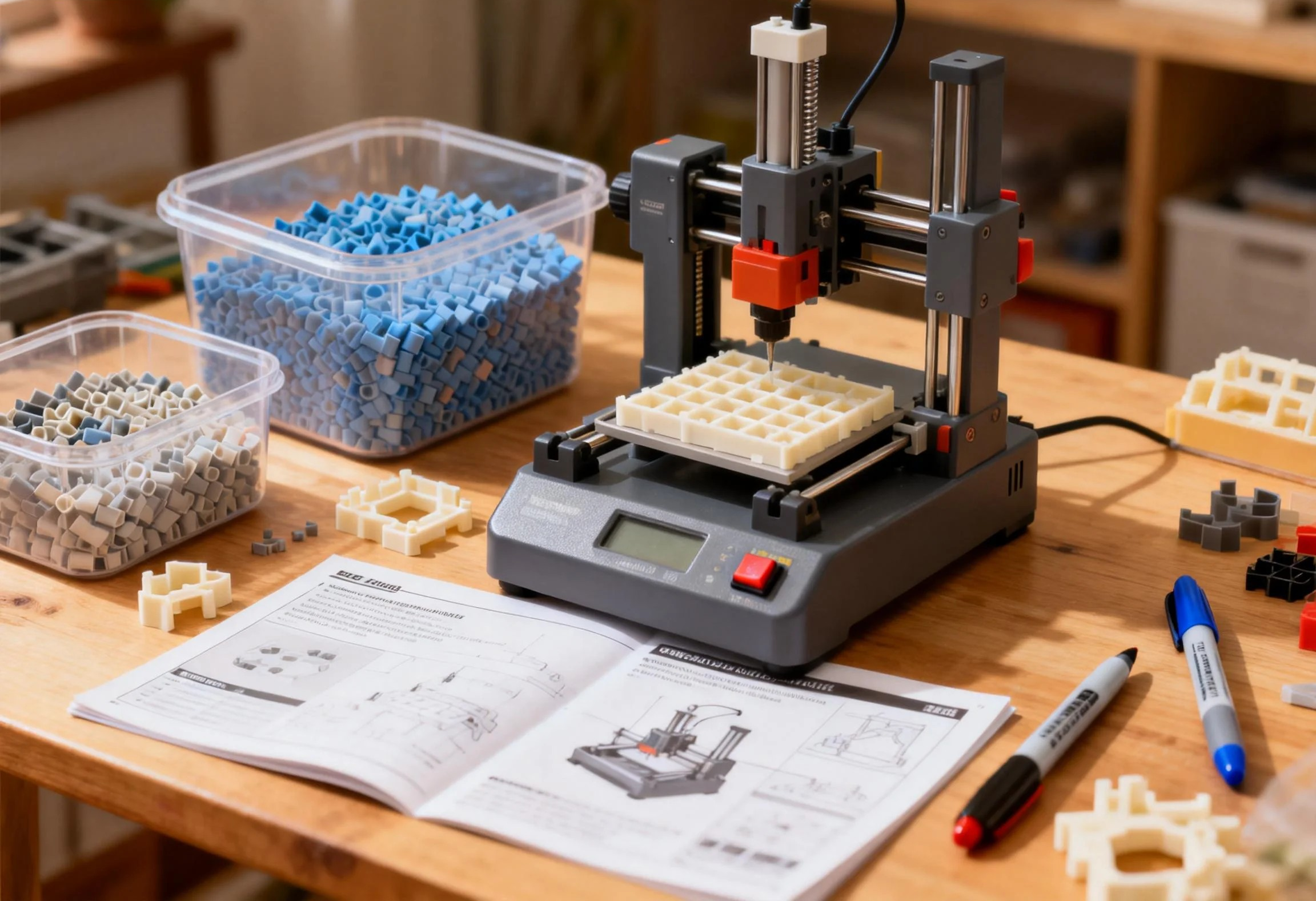
Have you ever wanted to create custom plastic parts, prototypes, or small batches of a product without the high cost of industrial tooling?
DIY injection molding at home makes this possible. This guide will walk you through the essentials of setting up a functional, small-scale injection molding process in your own workshop, balancing practicality with safety.
Table of Contents
What is DIY Injection Molding?
DIY injection molding is the process of adapting or building machinery to inject molten plastic into a custom mold at a small, hobbyist, or prototype scale. Unlike industrial machines costing tens of thousands of dollars, home setups are simplified, often manual or semi-automatic, and designed for lower volume and pressure. The core principle remains the same: plastic granules are heated until molten and then forced under pressure into a mold cavity, where they cool and solidify into the desired shape.
Essential Equipment for Home Injection Molding
You don’t need a factory floor to begin. A basic setup involves a few key components:
- Injection Molder: This is the heart of your operation. Options range from commercially available mini injection molders (like tabletop models) to fully DIY builds using repurposed parts like hydraulic rams or electric plungers.
- The Mold: This is your custom tool, typically made from aluminum or high-grade steel. For true DIY, machinable aluminum is common. For simple shapes, even high-temperature epoxy or silicone molds can work for very low-pressure processes.
- Plastic Material: You’ll use thermoplastic granules or pellets. Common starts include ABS, Polypropylene (PP), or Polyethylene (PE), which have forgiving melting temperatures.
- Supporting Tools: A precise gram scale for measuring plastic, high-temperature gloves, safety glasses, mold release spray, and basic tools for mold mounting and part removal are crucial.
Cost Analysis and Practicality
The startup cost for a robust DIY setup can range from $500 for a fully self-built system to over $2,000 for a quality benchtop machine. Mold creation is the most variable cost, from a low-cost DIY effort to several hundred dollars for a professionally machined aluminum mold.
This approach is profoundly cost-effective for prototyping and small production runs (dozens to hundreds of pieces) but cannot compete with industrial per-part pricing for high volumes.
Conclusion and Recommendation
DIY injection molding at home is a rewarding venture for makers, inventors, and small businesses. It empowers you to iterate designs rapidly and produce functional plastic parts on-demand.
Start with simple projects to master the process, prioritize safety at every step, and gradually scale your complexity.
Need Professional Results?
While DIY injection molding is excellent for prototypes and learning, moving to full-scale production requires professional precision, efficiency, and material expertise.
For high-quality, reliable results, consider partnering with a specialist. Fulu Plastic Products Co., Ltd., located in Xiaolan Town, Zhongshan City, offers expert injection molding, mold design, and manufacturing solutions. Equipped with modern facilities and a skilled team, we deliver precise, cost-effective services for both small-batch customization and large-scale production. Let us be your trusted partner in plastic manufacturing.